
AI Assistant for B2B Sales demos
Help sales rep create personalized high quality product demos faster with AI
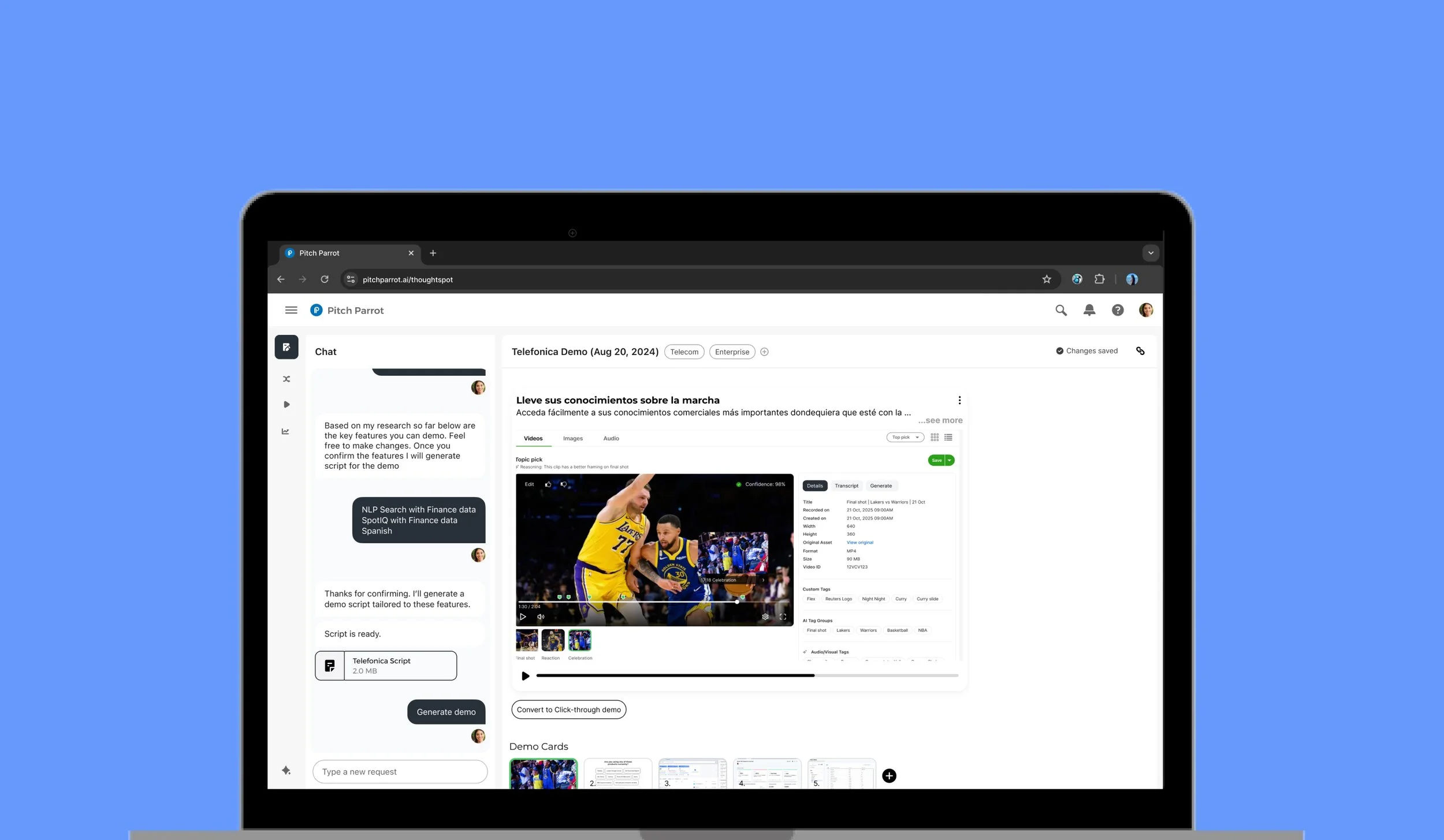
context
Today B2B software teams ship new features at an increasing pace but sales demo creation remains slow and manual. Sales representatives (Sales reps) often depend on Sales Engineers (SEs) to create and tailor demos for each interested customer (prospect), introducing delays, outdated content and limited scalability. As products become more complex, this dependency reduces visibility into demo quality and impact directly affecting sales velocity.
GOAL
Help Sales Rep create high quality B2B product demos faster with AI without needing a SE
MY CONTRIBUTION
Owned end to end design process
Research to execution
Defining core design patterns and components
Team
1 PM
2 Developers
3 innovation partners
DURATION
6 months
Target Audience
Primary: Meet Sheila, the Sales Rep: She is non-technical. Works in time-compressed moments, preps for demo between meetings. She constantly interacts with Account Executive, Sales Engineers and the Prospect while demos are repeatedly iterated and layered with technical details. She needs speed, confidence and autonomy as she pitches product to prospects.
Goal:. Move deals forward to close fast
Tasks: follow-ups, outreach, momentum management, handoffs
Success metrics: higher win confidence, deals closed, fewer handoffs
Research and Insights:
I needed to understand the demo creation process during a sales process, Sales reps interaction with other key people in the ecosystem, key usecases and the most emotional pain points to create the most impact. I gathered input from over 50 customers through a combination of interviews and an online survey, across sales engineers, account executives and sales representatives.
Key findings:
Here are the problems and related solutions explored.
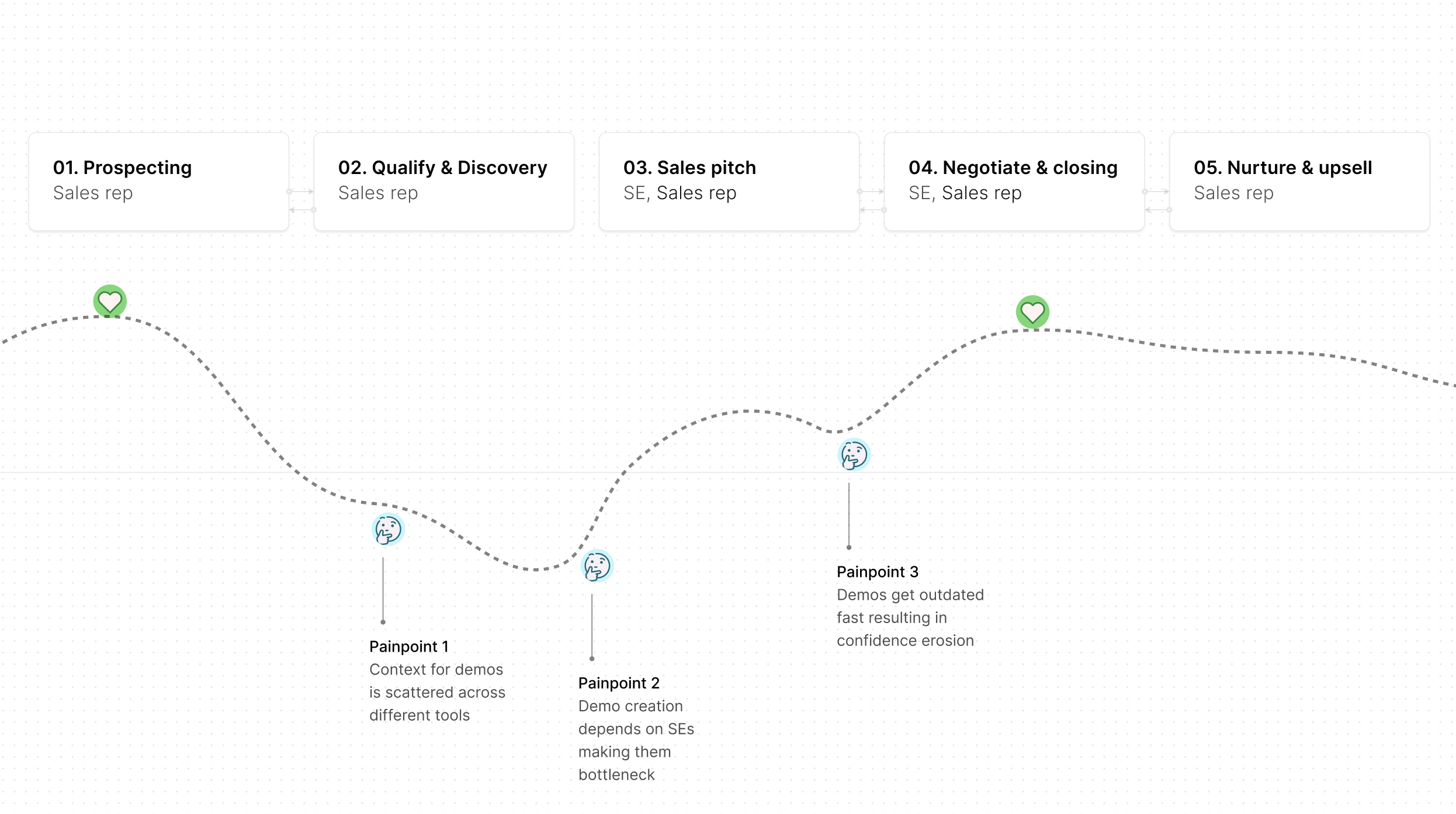
Manual process. Sales Representatives depend on Sales Engineers (SEs) to create a high-quality demo mapping prospect needs to relavant product features, making SE’s a bottleneck and dampening momentum. “I feel helpless watching good deals stall.”
Context for demos is scattered across different tools (CRM, call transcripts, notes, prior demos, docs) creating cognitive overload. “I’m drowning in tools, content, and guesswork.”
Demos get outdated fast resulting in confidence erosion. “I don’t feel credible without an SE. I need to find the right thing fast ”
Scenario
Sheila has a demo within 24 hours. The qualification and discovery call is already over with the prospect where their paint points and basic information like need, budget and timeline were collected.
DESIGN Guidelines
Research made it clear that Sales reps needed:
Speed-first workflow: Use defaults rather than setup
Conversation first, canvas second: Use text modality to get intent and synthesis.
Design for trust and confidence: Show what’s AI-generated and why it’s suggested.
Progressive disclosure over power tools: Reveal complexity only when needed.
Painpoint 1: How can sales reps create product demos without relying on SE’s?
Iteration 1:
Enabling self-serve demo creation for sales reps
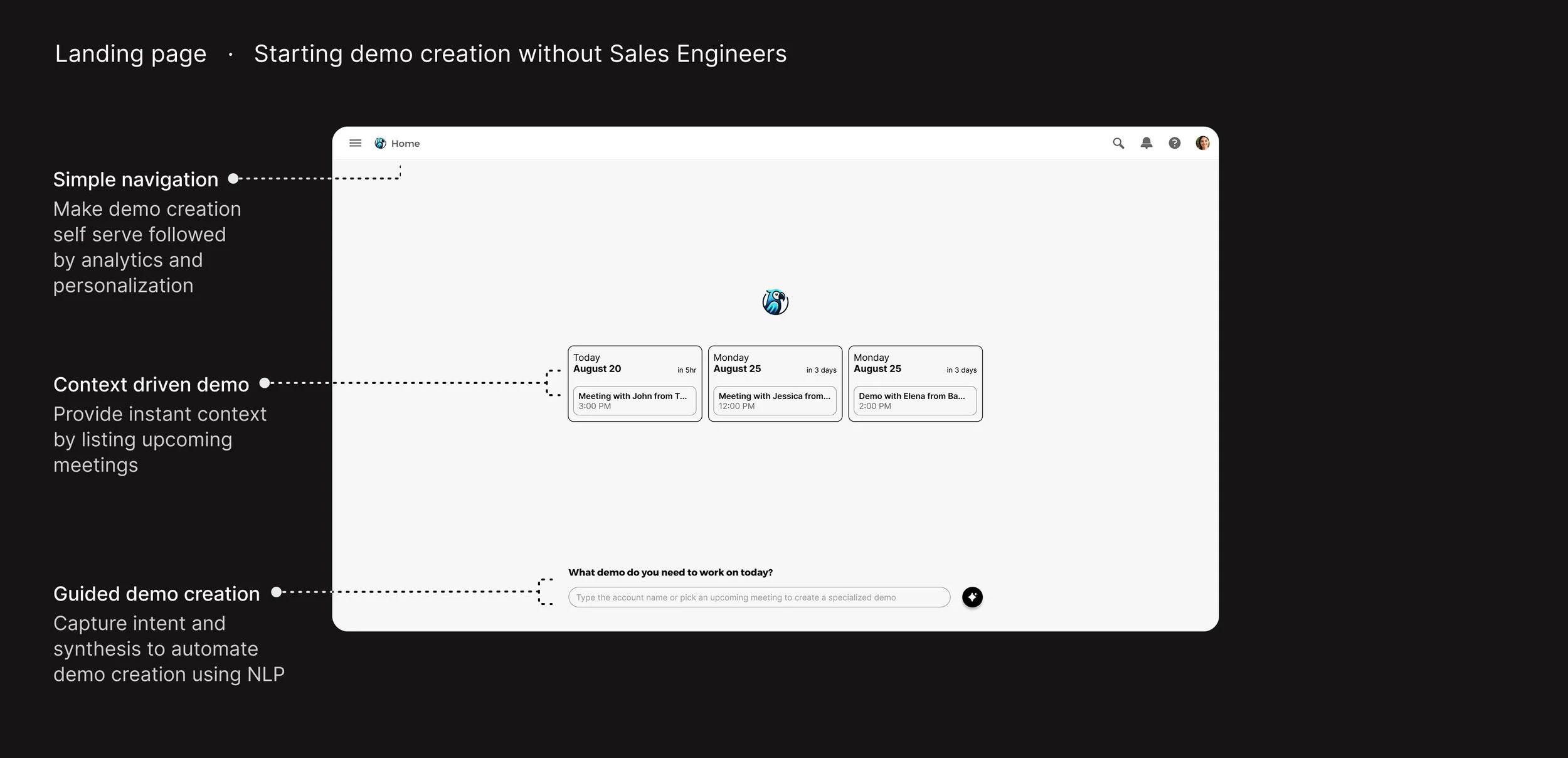
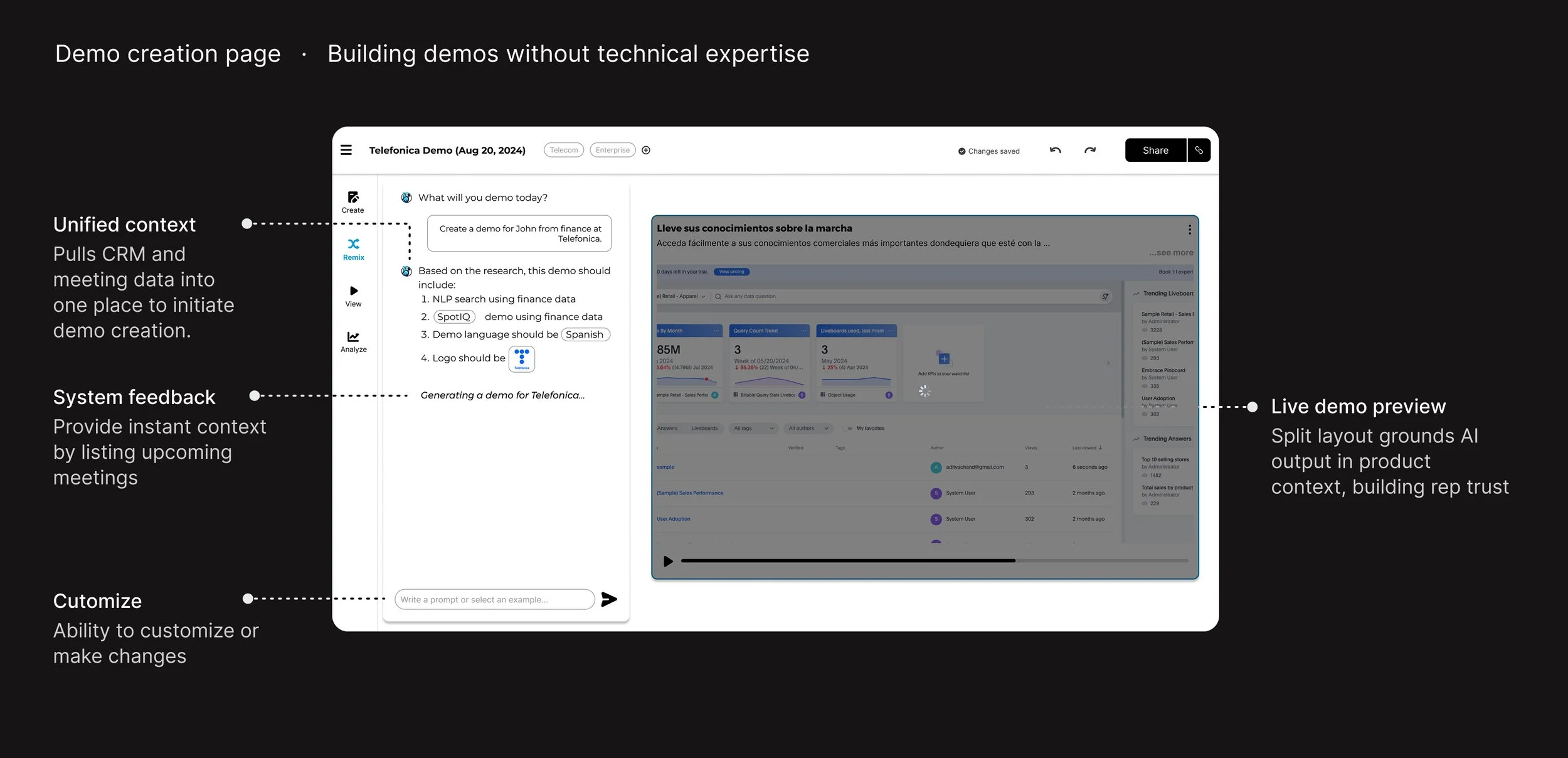
Feedback:
1. Sales reps repeatedly expressed trust issues with auto generated demos. ““Just because it’s automated doesn’t mean I’ll use it in front of a customer.”
2. Sales reps wanted more control and ability to tweak narrative better
3. Have many demos, need an overview/ dashboard sorts to keep up
Iteration 2:
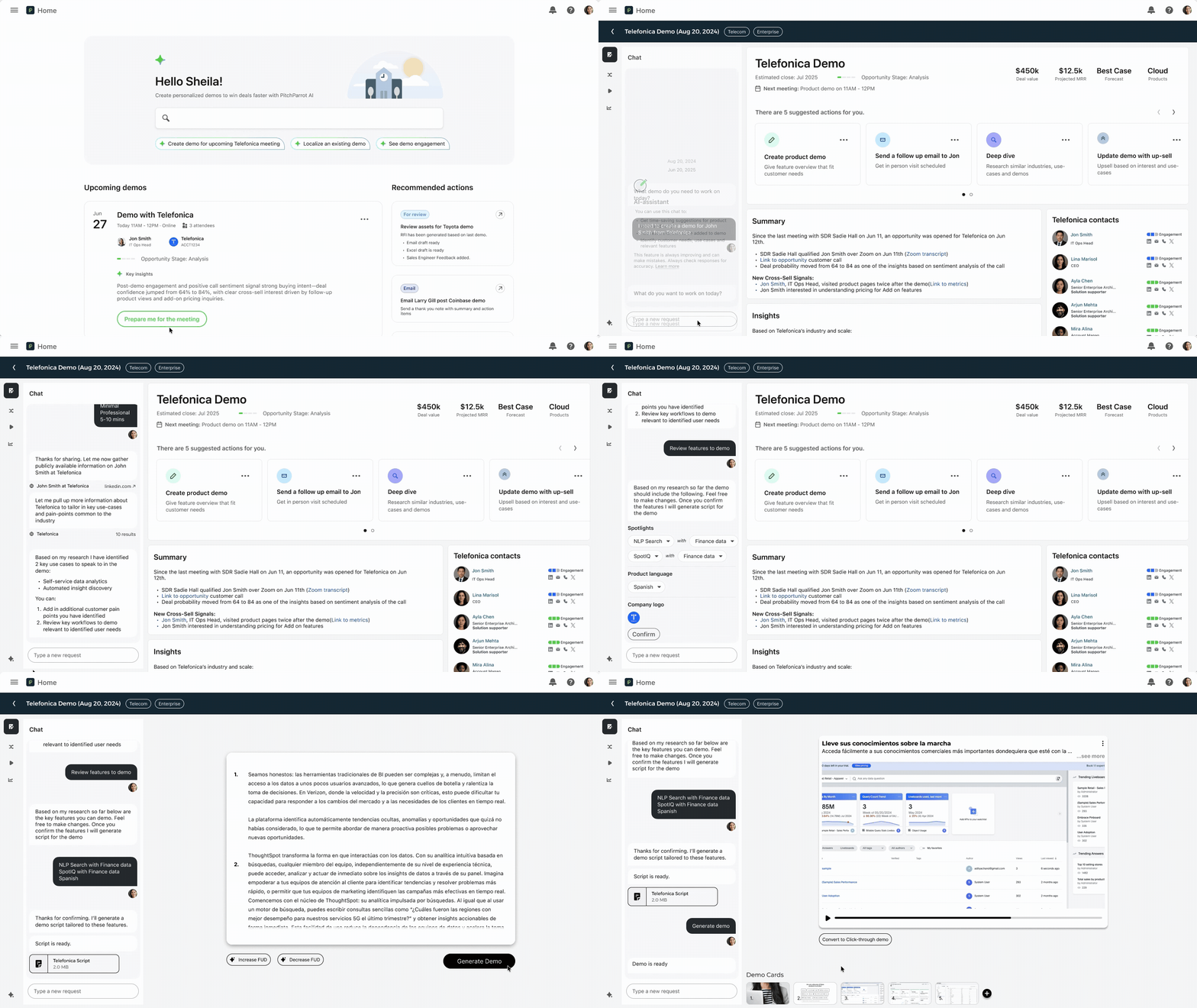
Context-driven demo creations
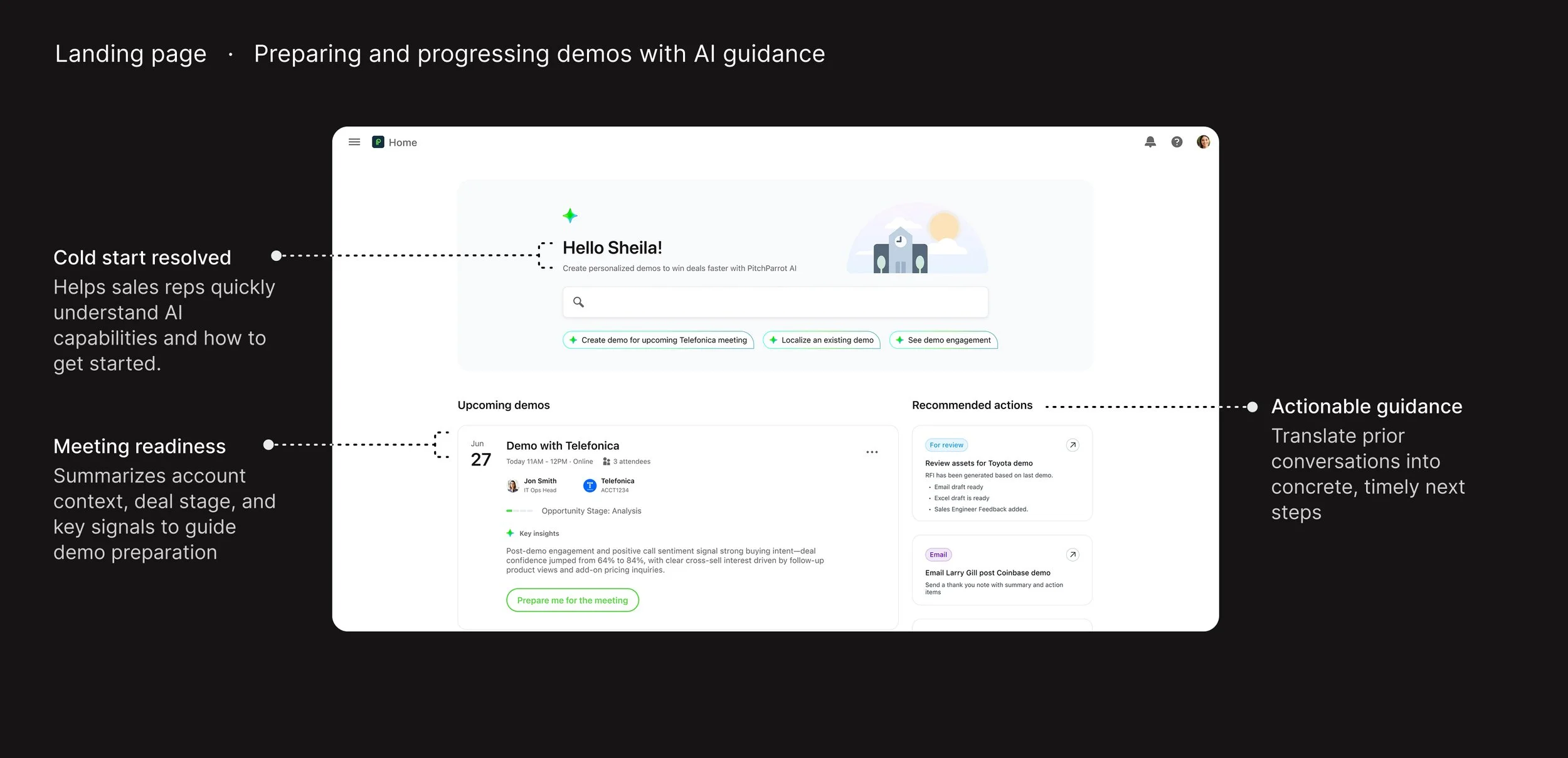
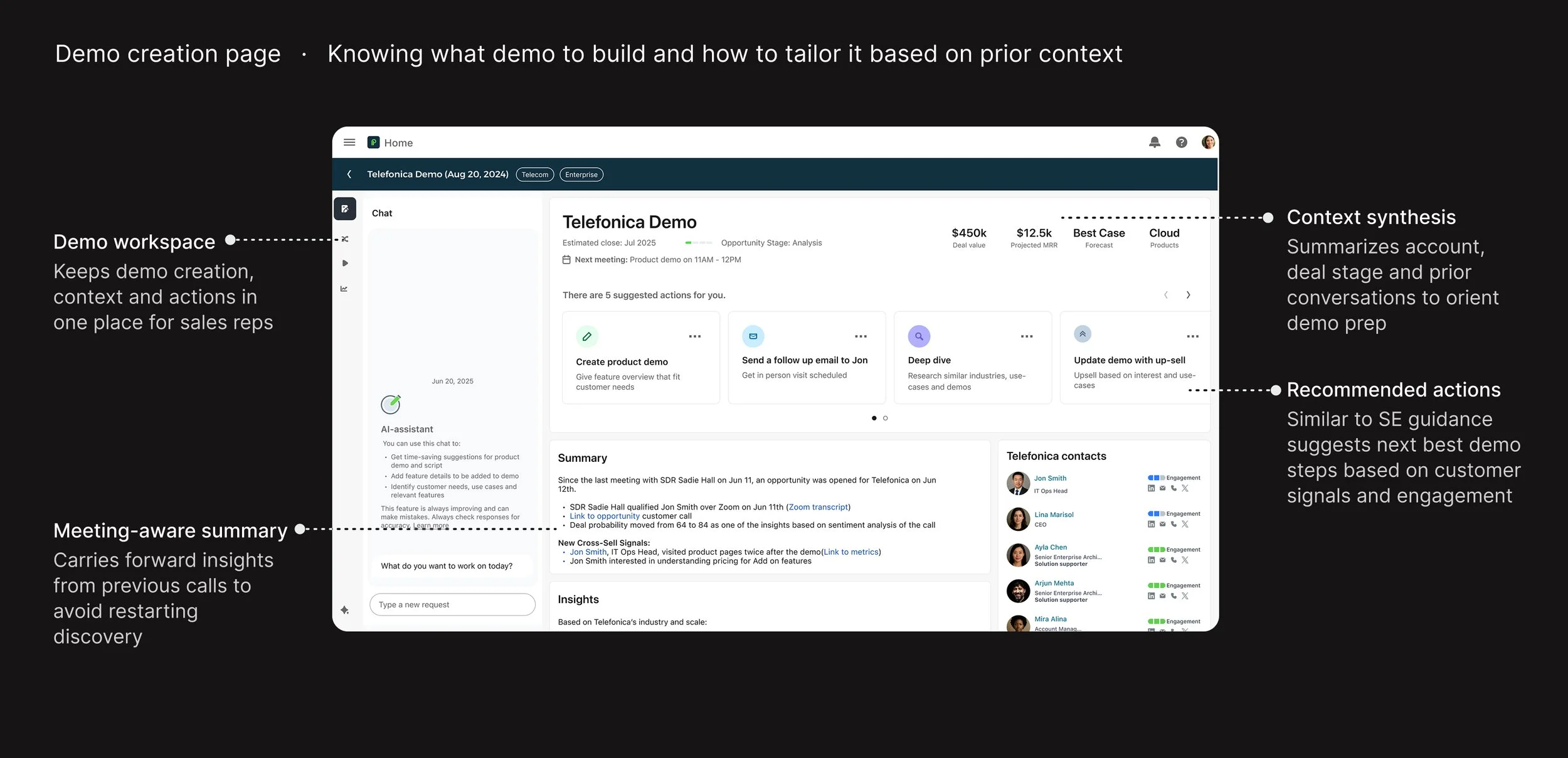
Painpoint 2: How can we help sales reps trust and confidently send demos without SE support?
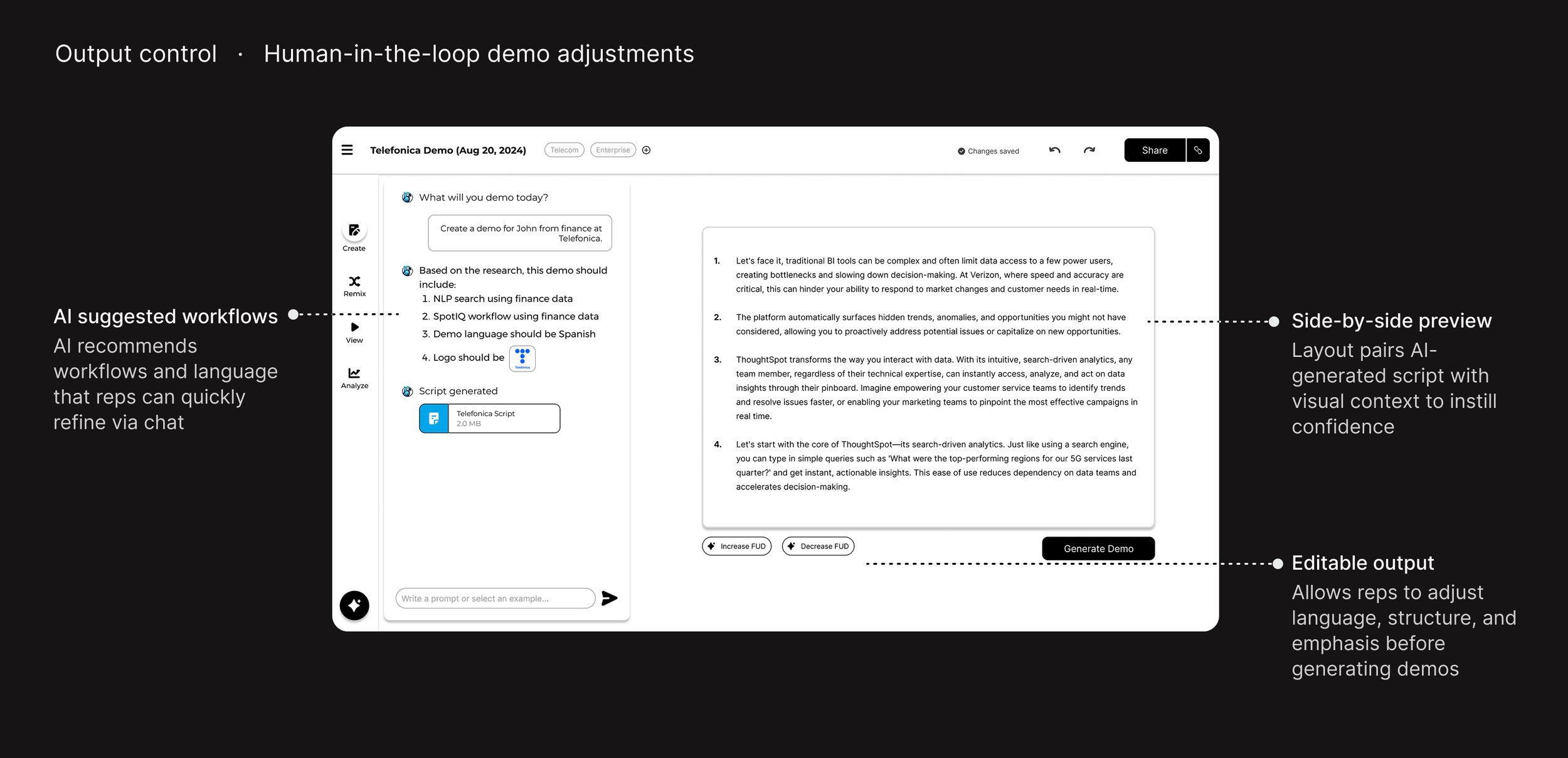
Iteration 1:
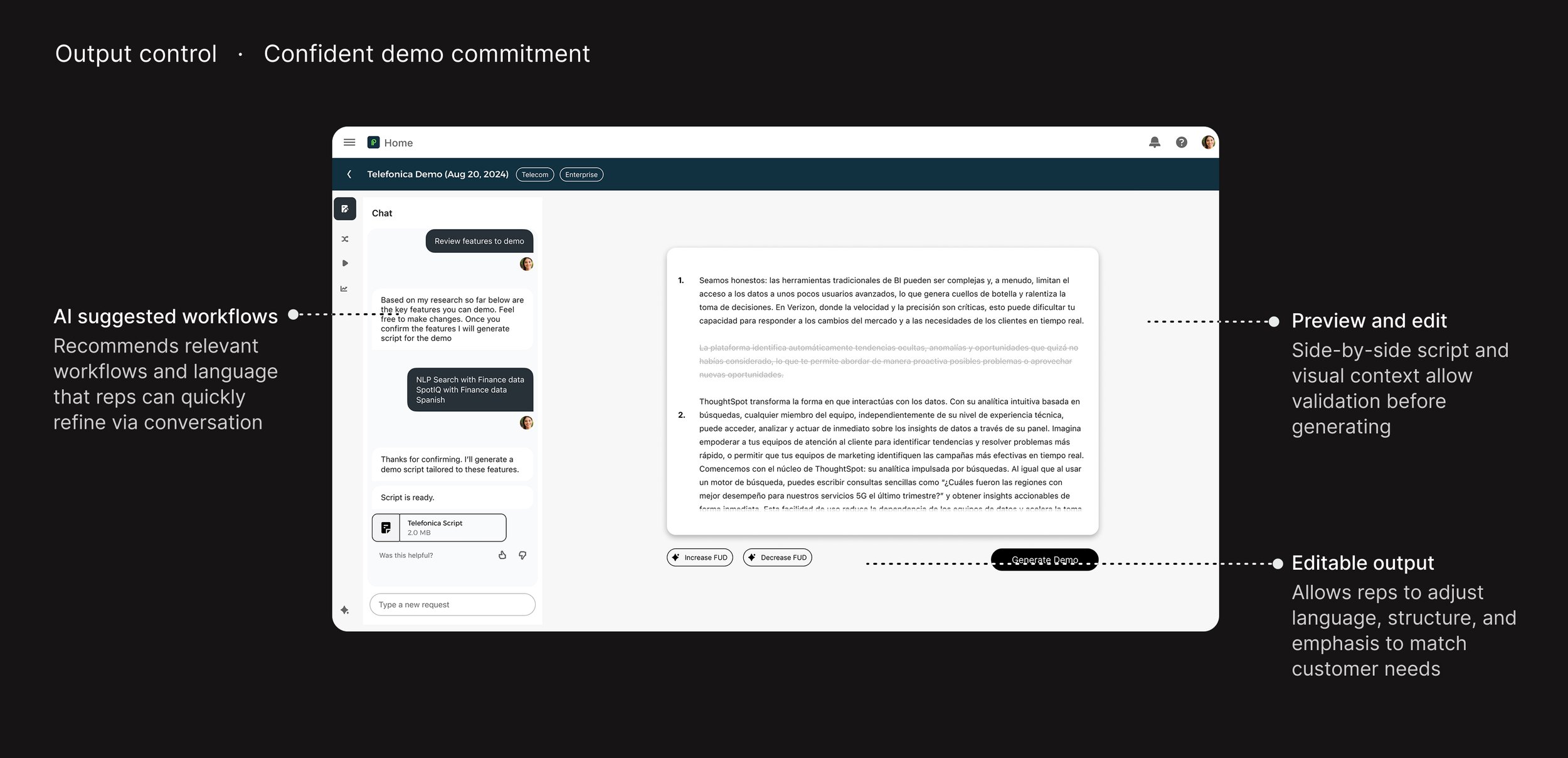
Human-in-the-loop demo creation for confidence
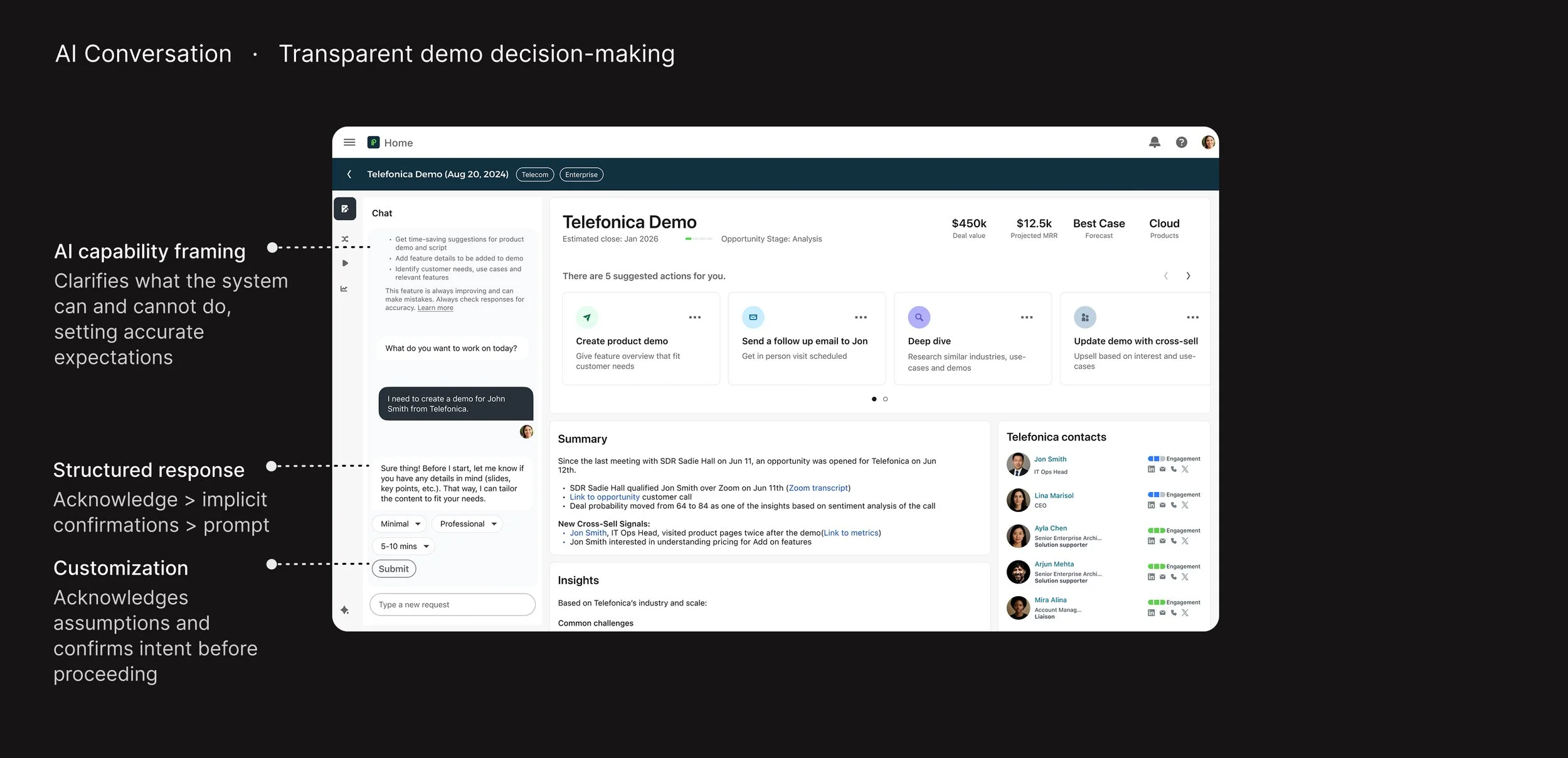
Iteration 2:
Trust-driven demo decision-making with granular controls
Prototype
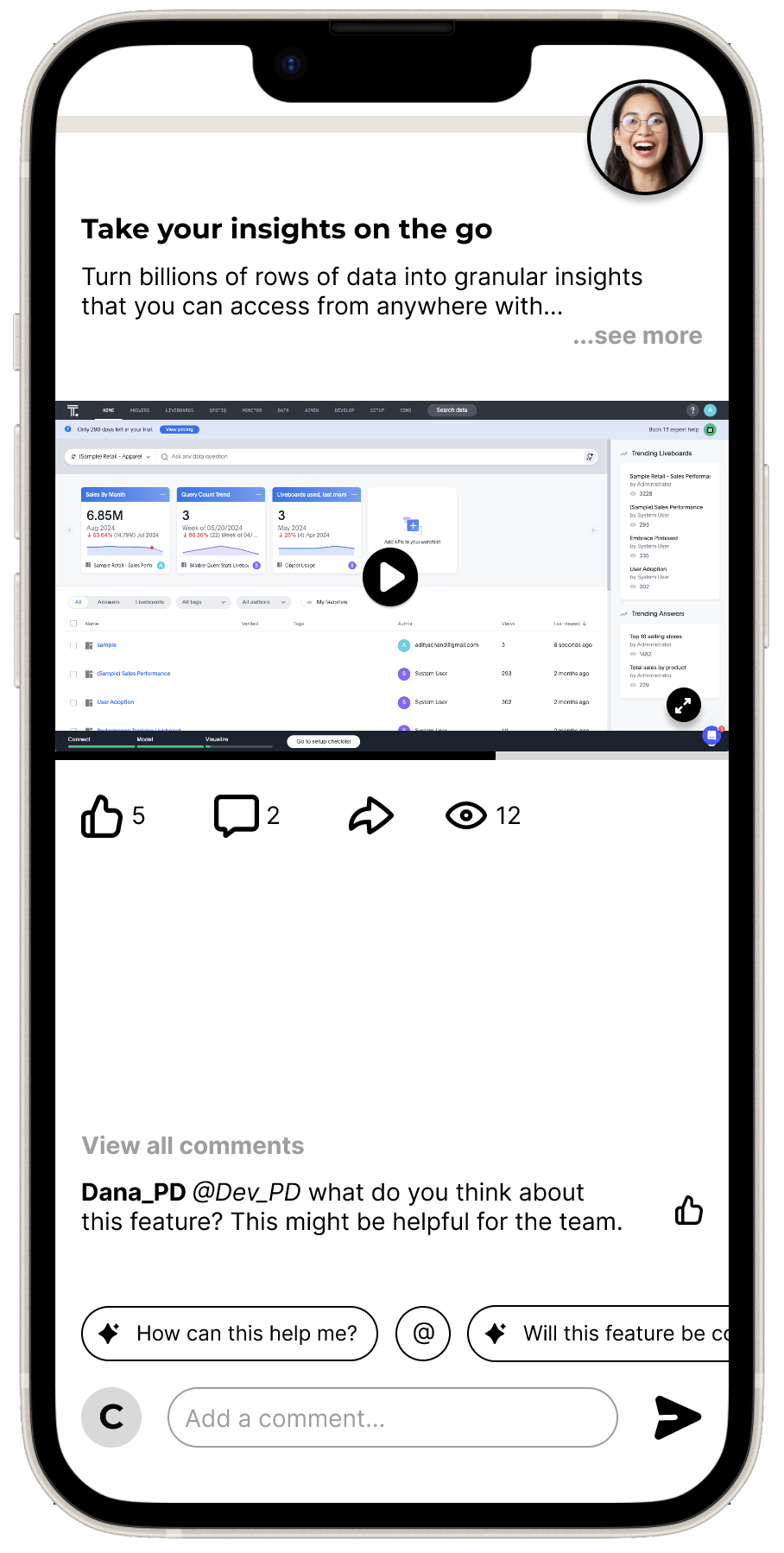
Customer View Experience with shared link
Learnings
Think scalable primitives when designing for ai agents
Pain shows up as workarounds
Hide complexity, preserve capability so users can act with confidence